An AVS mismatch means the billing address information submitted with a card payment did not match the information the card issuer has on file. In many cases, the reason for this is pretty straightforward – an old ZIP code, recently changed address, or incorrect street number all can be enough to trigger a mismatch. In other cases, the information may be correct, but the verification cannot be completed for another reason.
If you’re trying to understand an AVS mismatch, the first step is knowing what AVS actually checks and what the result does, and does not, tell you.
Below, I’ll explain what an AVS mismatch truly means, how the verification process works, and what to check first so you can resolve the problem without turning a simple payment into an afternoon project.
Key Takeaways
An AVS mismatch means the billing address submitted with the payment did not fully match the information used for verification.
A mismatch does not automatically mean the card is bad, the customer is committing fraud, or the payment was declined.
AVS compares billing information submitted with the transaction against billing information the card issuer has on file, not the billing address against the shipping address.
Common causes include incorrect address details, outdated billing information, incomplete information, and situations where verification cannot be completed.
AVS response codes indicate what happened during address verification, but the payment processor or merchant ultimately determines how to handle the transaction.
Businesses should have a process for reviewing AVS results so legitimate payments aren’t unnecessarily lost while potential risks are still addressed.
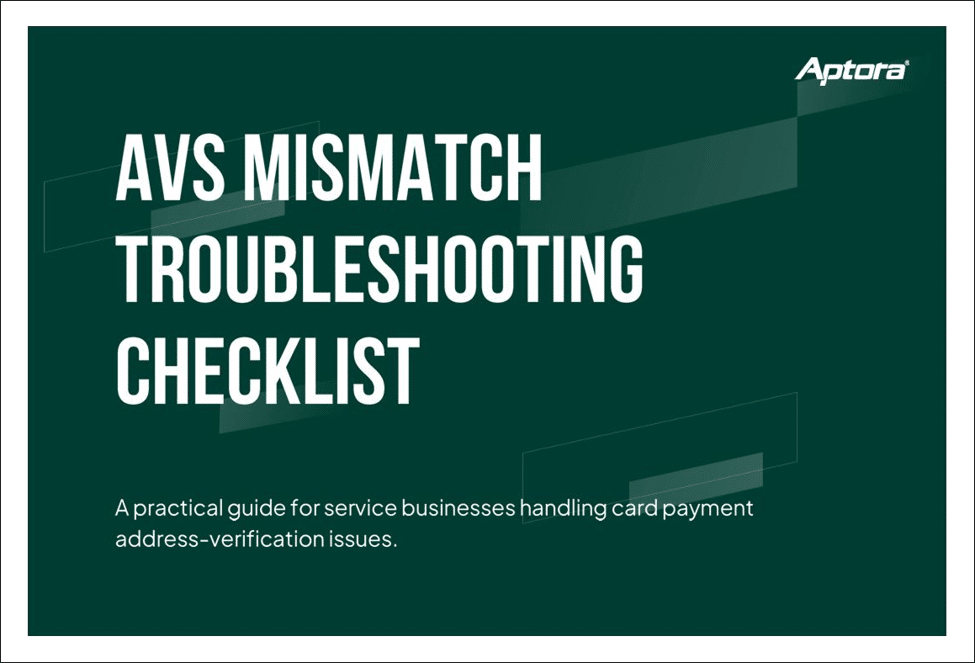
📥 Not sure what to do when a customer’s payment triggers an AVS mismatch? Download our FREE AVS Mismatch Troubleshooting Checklist to provide your team with a standardized, step-by-step guide to quickly decode AVS responses, determine what to do next, and resolve payment issues faster.
AVS stands for Address Verification Service. It is a payment-security tool commonly used with card-not-present transactions (e.g., online purchases, phone orders, mail orders, etc.).
When a payment requests address verification, the street address and postal code provided by the cardholder are compared with billing-address information associated with the card account. Visa explains that the issuer, or Visa acting on its behalf in certain cases, returns the result of that comparison. For more detail on how this process works, see Visa’s Address Verification Service (AVS) documentation.
So, what does an AVS mismatch actually mean in plain English?
The address information entered for the payment did not completely agree with the billing information used for verification.
Notice what that does not tell you. It does not prove that a customer is fraudulent, confirm that the credit card is bad, or necessarily mean the issuing bank declined the purchase. Understanding that difference is important because an AVS mismatch can have several harmless explanations, and the right response depends on what actually caused the mismatch.
How Does Address Verification Work?
The actual process of AVS happens behind the scenes and generally takes only a few steps:
The customer enters card and billing information.
The payment request sends the applicable address information for verification.
The issuer compares the submitted street address and ZIP or postal code with its records.
An AVS result indicates whether those elements matched.
Once the AVS result is returned, the merchant’s payment system can use it to help determine how to handle the transaction. For example, Visa Acceptance Solutions explains that merchants can use returned AVS information in payment routing, risk decisioning, and decline logic.
This is where people sometimes misunderstand an AVS error. AVS produces a verification result, not a decision about whether the payment is legitimate. Depending on the payment gateway, processor, and merchant configuration, that result may contribute to the transaction being accepted, flagged for review, or declined.
AVS Does Not Compare Your Billing and Shipping Addresses
One common misconception is that AVS compares a customer’s billing address with their shipping address. It doesn’t.
The important comparison is between the billing-address information submitted with the transaction and the billing information the card issuer has on file for the cardholder’s account.
Your shipping address can legitimately be somewhere else. You might be sending a gift, ordering equipment for another location, or working somewhere other than your billing address.
What Causes an AVS Address Mismatch?
Most mismatches are much less mysterious once you look at the underlying billing information.
Common causes include:
An incorrect street number
The wrong ZIP or postal code
An old billing address
A recently changed address that has not been updated everywhere
Entering a service or shipping address instead of the card’s billing address
Incomplete billing information
International address-verification limitations
An issuer that cannot perform the requested verification
The important lesson is that “mismatch” does not always mean “bad card.”
The good news is that an AVS mismatch gives you something specific to investigate. In my experience working with service businesses for more than 25 years, the best way to approach an AVS mismatch is by starting with what you can verify.
Begin by checking the billing address entered for the transaction against the address the card issuer has on file. If those details match, the next step is to look at the AVS response and your payment processor’s rules before assuming there is a problem with the card itself.
How to Fix an AVS Mismatch Error
If you’re the cardholder, don’t start by repeatedly submitting the same payment. Double check all the information first.
1. Verify the Billing Address
Confirm the billing address associated with the card, especially the:
Street number and street address
ZIP code
Postal code
Use the card’s billing address, not automatically the address where the product is being shipped or the service was performed.
2. Check for an Old Address
Recently moved?
Log in to your credit card or bank account and see what billing address is actually on file. Your current home address and the address associated with your card may not yet be the same.
3. Correct the Information and Retry Once
If you encounter an error, correct it and submit the transaction again.
If the same information continues producing a credit card AVS mismatch, don’t keep hammering the payment button. At that point, you need more information rather than more attempts.
4. Contact the Card Issuer
Call the number on the back of the card and confirm that the issuer has the correct billing information.
The issuer can also help determine whether another account issue is affecting the payment.
5. Ask About Another Payment Method
If the card information is correct but the merchant still cannot complete the transaction, ask whether another payment method is available.
For a service business, losing a legitimate payment because no one knows what to do next is an avoidable problem.
💡 Pro Tip: Businesses should train employees to distinguish an address-verification problem from a generic card decline. Telling every customer that “your card was declined” can be both unhelpful and inaccurate.
Common AVS Response Codes and What They Mean
There isn’t one universal set of AVS response codes or messages used across every payment processor and card network. The exact wording a merchant sees can vary, but the codes generally indicate whether the submitted address matched, partially matched, could not be verified, or produced another verification result.
Visa’s documentation defines these AVS response codes as:
Code
AVS Result
Meaning
Y
Full match
Street address and ZIP/postal code matched
A
Partial match
Street address matched
Z
Partial match
ZIP/postal code matched
N
Non-match
Address information did not match
U
Unable to verify
Verification could not be completed
R
Retry
Verification produced an indeterminate result
These codes describe what happened during address verification, but they do not necessarily determine what happens to the payment. A merchant’s processor or payment system may use the AVS result as part of its own approval, review, or decline rules.
Because processors can translate, map, or supplement network response codes, businesses should check the documentation for their specific payment processor or gateway before interpreting a code or creating rules around it.
Does an AVS Mismatch Mean the Card Was Declined?
Not necessarily.
This is one of the most important points to understand.
An AVS result tells the payment system how the address verification turned out. The transaction’s ultimate handling can involve the card issuer, processor, payment gateway, and merchant’s own risk settings.
A partial match, for example, tells you something very different from a complete non-match, and if the address could not be verified at all, that does not necessarily mean the information was incorrect. It may simply mean the verification could not be completed.
Businesses should therefore avoid thinking of AVS as a simple:
Match = good. Mismatch = fraud.
Payment processing does not work that neatly.
Does an AVS Mismatch Mean Fraud?
No.
AVS is useful because an unexpected address can be a warning sign, particularly when the person making a card-not-present payment cannot provide billing information associated with the account.
But legitimate customers can produce mismatches too.
On the other side of the equation, a fraudster who already possesses the correct billing address may pass an AVS check. That is why businesses should treat address verification as one security signal rather than complete proof of identity.
Other controls can complement AVS. For example, CVV or CVV2 can help verify that a customer has information printed on the payment card. The PCI Security Standards Council provides guidance on using card-verification codes in card-not-present transactions and the restrictions on storing them after authorization.
What Businesses Should Do with Repeated AVS Errors
If AVS mismatches happen regularly in your business, don’t solve the problem by automatically approving every transaction or declining every one. Instead, find out where the problem is occurring and whether your payment process is handling different AVS results appropriately.
Start by asking a few practical questions:
Which AVS responses are you receiving most often?
Are partial matches being handled differently from complete non-matches?
Do employees know what an AVS mismatch actually means and what to do when one occurs?
Are customers accidentally entering a service or shipping address instead of their billing address?
Does your payment gateway provide enough information to understand why verification failed?
When a payment cannot be completed, does the employee know what to tell the customer or what to try next?
That last question matters more than it might seem. In a service business, a payment problem rarely ends with the payment itself. It can mean another phone call, another task for the office, extra time for the technician, or a customer who simply gives up and pays later.
The goal isn’t to eliminate every AVS mismatch. It’s to have a clear process for handling them so a routine verification issue doesn’t become a problem with getting paid.
Payment Processing Is Complicated Enough. Your Software Shouldn’t Make It Worse.
AVS is just one example of the complications that can arise when payment collection is treated as a separate process from the rest of the business.
For a service business, a payment is connected to much more than a card transaction. It may need to tie back to a customer, an invoice, a completed job, recurring billing, or the technician who collected the payment. When those pieces are spread across different systems, employees have to spend time moving information from one place to another and figuring out what happened when something doesn’t line up.
Aptora 360 brings payment collection into the same system as the workflows contractors already use. Customers can pay by credit card or ACH, businesses can set up recurring payments, and payment activity stays connected to customer and invoice records. With online and mobile payment options, contractors can also collect payments closer to where the work takes place.
The goal isn’t to add another tool for your employees to manage. It’s to reduce the number of steps between completing the work and getting paid, while keeping the information your business needs connected along the way. Explore payment processing with Aptora 360.
FAQs
1. Can an AVS mismatch happen even when the customer enters the correct address?
Yes. An issuer may be unable to verify the address for reasons unrelated to an incorrect entry, including verification limitations or temporary system issues.
2. Does AVS work with every type of payment?
AVS is primarily associated with card-not-present transactions, such as online, phone, and mail-order payments, where the cardholder’s billing information can be submitted for verification.
3. Can a merchant choose to ignore an AVS mismatch?
A merchant’s payment system can be configured to handle AVS results in different ways, but automatically ignoring every mismatch can remove a useful security signal from the payment process.
4. Why might two businesses handle the same AVS result differently?
Payment processors and gateways can translate or supplement network response codes, and merchants can apply their own approval, review, or decline rules to those results.
5. What should a business do if AVS mismatches happen frequently?
Look for patterns in the AVS responses, review how the payment gateway handles them, and make sure employees know how to respond instead of automatically approving or declining every transaction
Share:
Facebook
Twitter
Pinterest
LinkedIn
James R. Leichter
James R. Leichter, renowned HVAC business consultant, author, and public speaker, is dedicated to empowering HVAC businesses with innovative strategies and insights. Leichter, affectionately known as 'Mr. HVAC,' brings over 27 years of industry expertise and a passion for practical solutions, assisting HVAC businesses to streamline operations and maximize profits. Discover transformative guidance at MrHVAC.com.
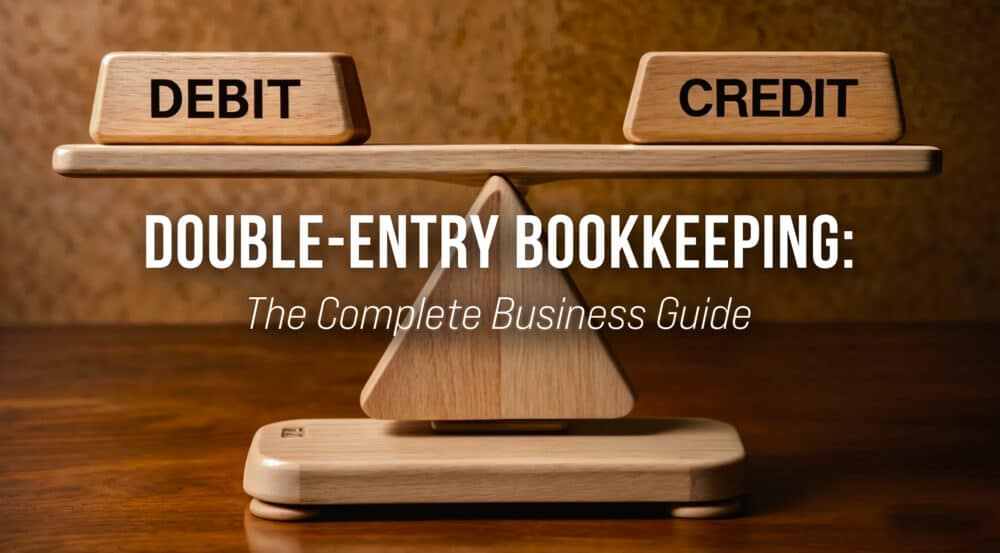
Quick Answer Double-entry bookkeeping is an accounting system that records every business transaction in at least two accounts, ensuring total debits always equal total credits.